.webp)
The Resilience of Character Grade Walnut
The Resilience of Character Grade Walnut

For most of the last decade, the brief was the same: clean grain, no knots, no surprises. Veneers were graded for uniformity, and anything that read as character was quietly set aside.
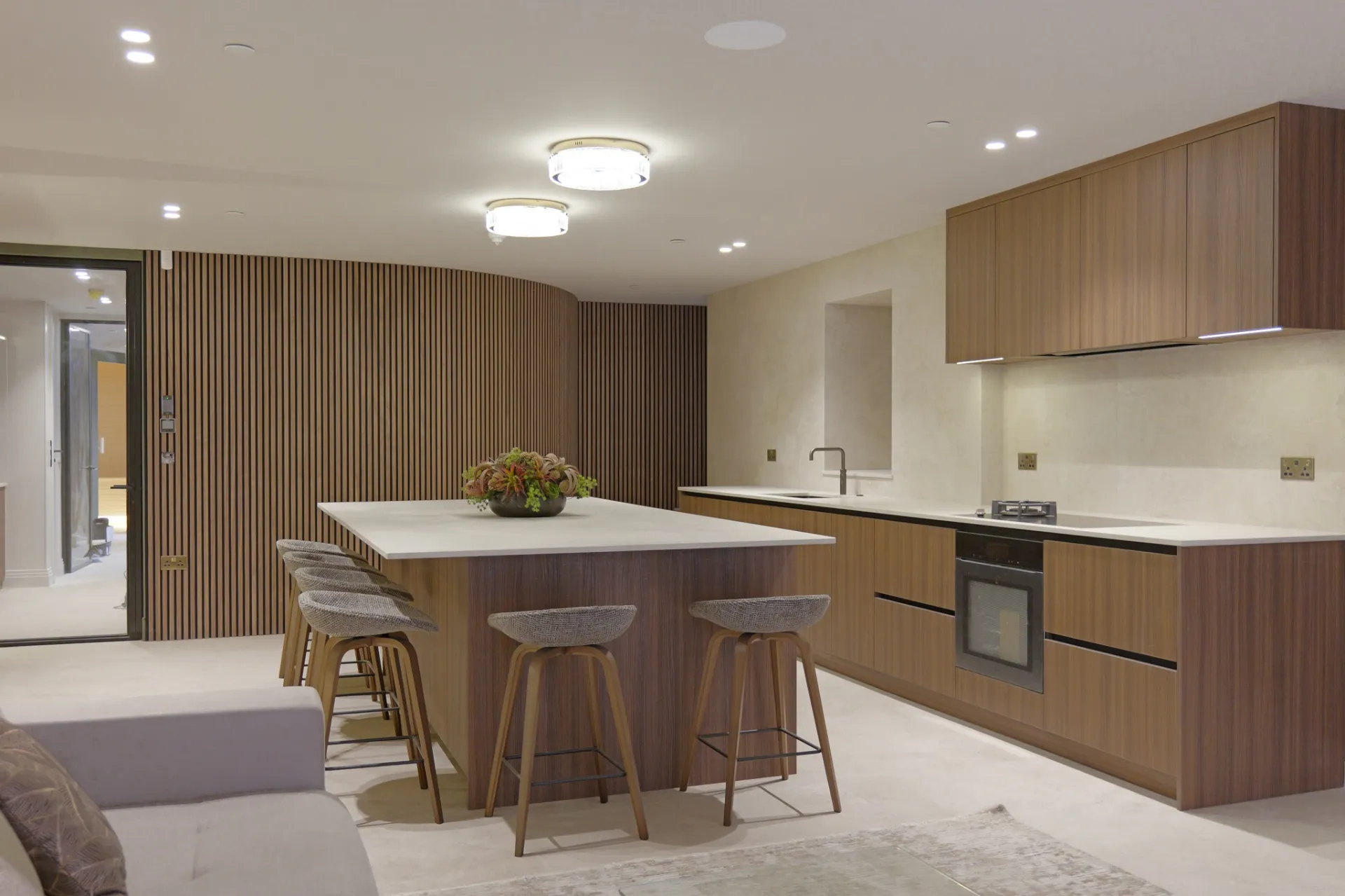
That has changed. Over the past two years, more than half of our walnut projects have specified character grade — the cut that keeps the knots, the colour variation, the grain that turns mid-board. Clients are no longer asking for furniture that looks manufactured. They are asking for furniture that looks alive.
Why now
Part of it is fatigue with the flatness of digital materials. Part of it is a real shift in how people think about longevity — a board that already shows its history will not be ruined by another decade of use. And part of it, frankly, is supply: the trees that produce perfectly clean walnut are getting harder to find.
“We stopped apologising for the knots. The clients we work with now ask for them by name.”
The craft challenge is different. Character grade demands more from the maker, not less — every board has to be read individually, matched by eye, and laid out so the variation reads as composition rather than noise. It is slower work. It is also, we think, better work.