.webp)
The Art of Invisible Joinery
The Art of Invisible Joinery
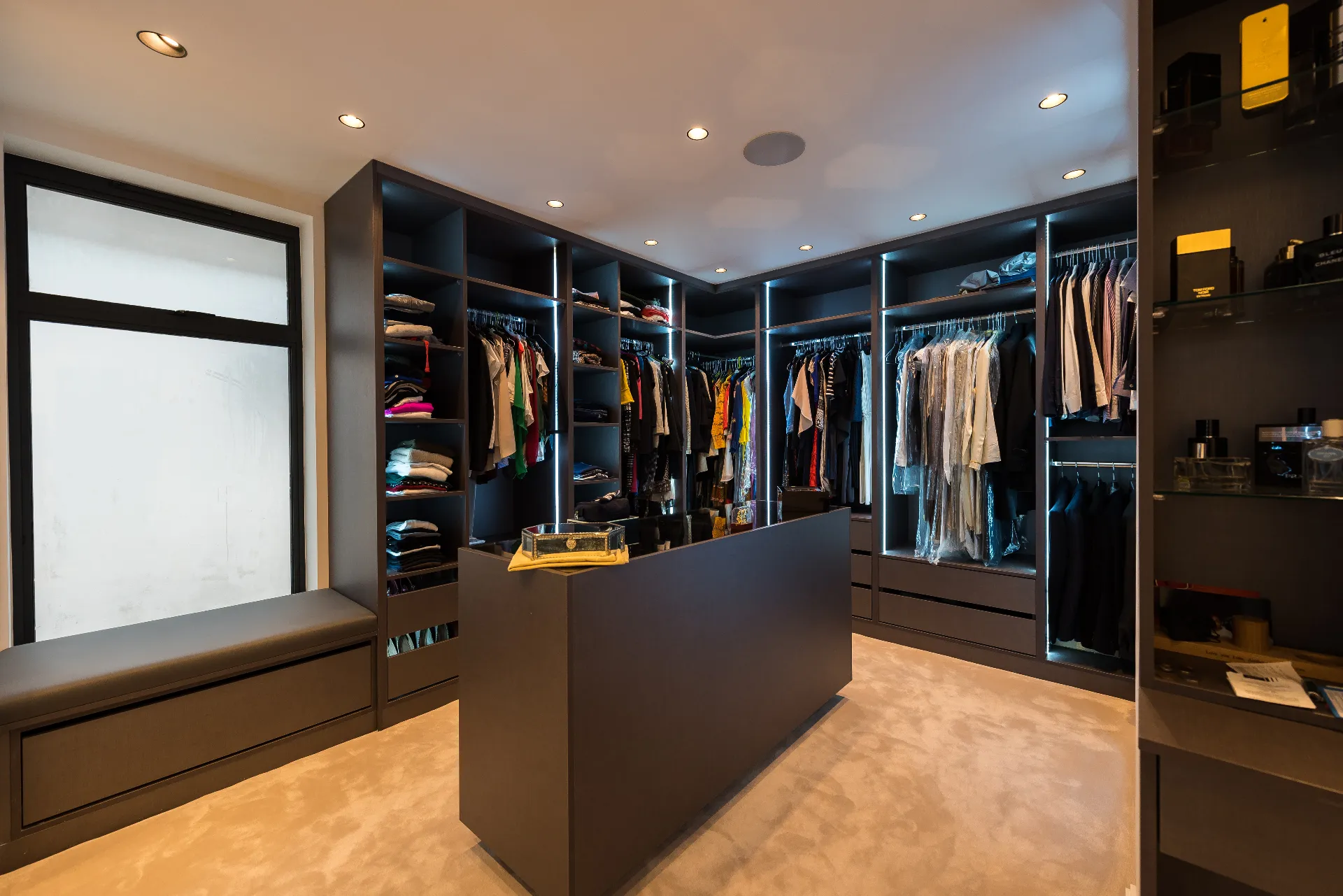
A walk-in wardrobe looks calm when it is finished. The path to that calm is anything but. Every drawer that closes silently, every door that opens without a handle, every shelf that appears to float is the result of an engineering decision made months earlier.
The hidden structure
The carcass behind a fitted wardrobe is rarely the part the client sees, but it is the part that determines whether the visible work survives a decade of daily use. We over-build it on purpose: 18mm structural board where 15mm would pass, dado joints where a butt joint would be cheaper.
“If the joinery is doing its job, you should not notice it. If you do notice it, we have not done our job.”
The mechanisms — Blum runners, push-to-open latches, soft-close hinges — get most of the attention in marketing literature, but they are the easy part. The hard part is the millimetre of tolerance that lets them work for ten years instead of three.