.webp)
The Architecture of Silence: Designing for Stillness in Chelsea
The Architecture of Silence: Designing for Stillness in Chelsea
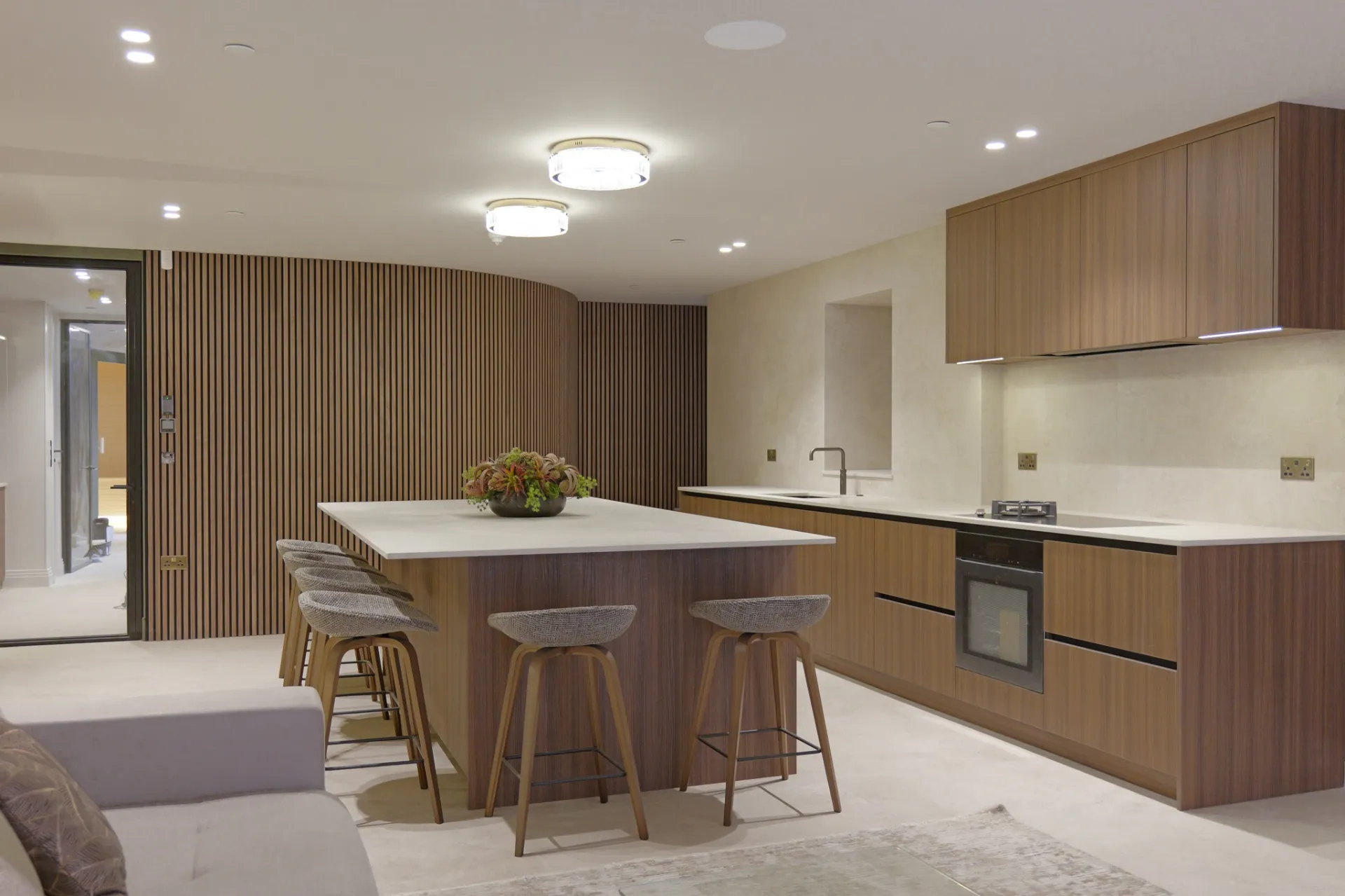
When the client first walked us through the apartment, they used a word we rarely hear at a first meeting: quiet. Not minimal, not pared-back, not even calm — quiet. Furniture, they felt, had a habit of raising its voice. They wanted the opposite.
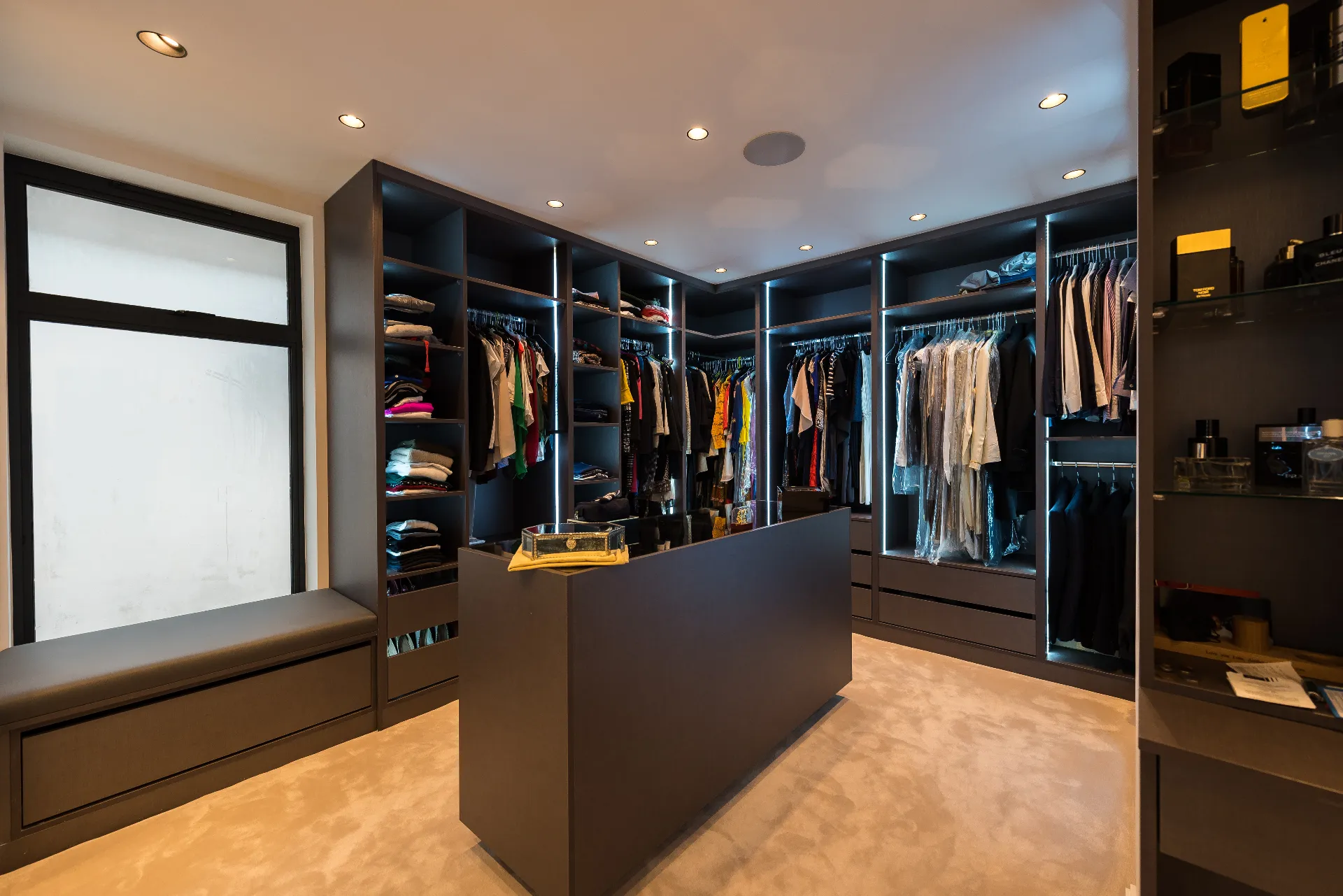
That brief shaped every decision that followed. The plan was already strong: generous ceiling heights, a long north-facing wall, original cornices reinstated where they had been lost. Our work was to add the joinery the apartment needed to function as a home — without ever competing with the room itself.
Designing the reveal, not the cabinet
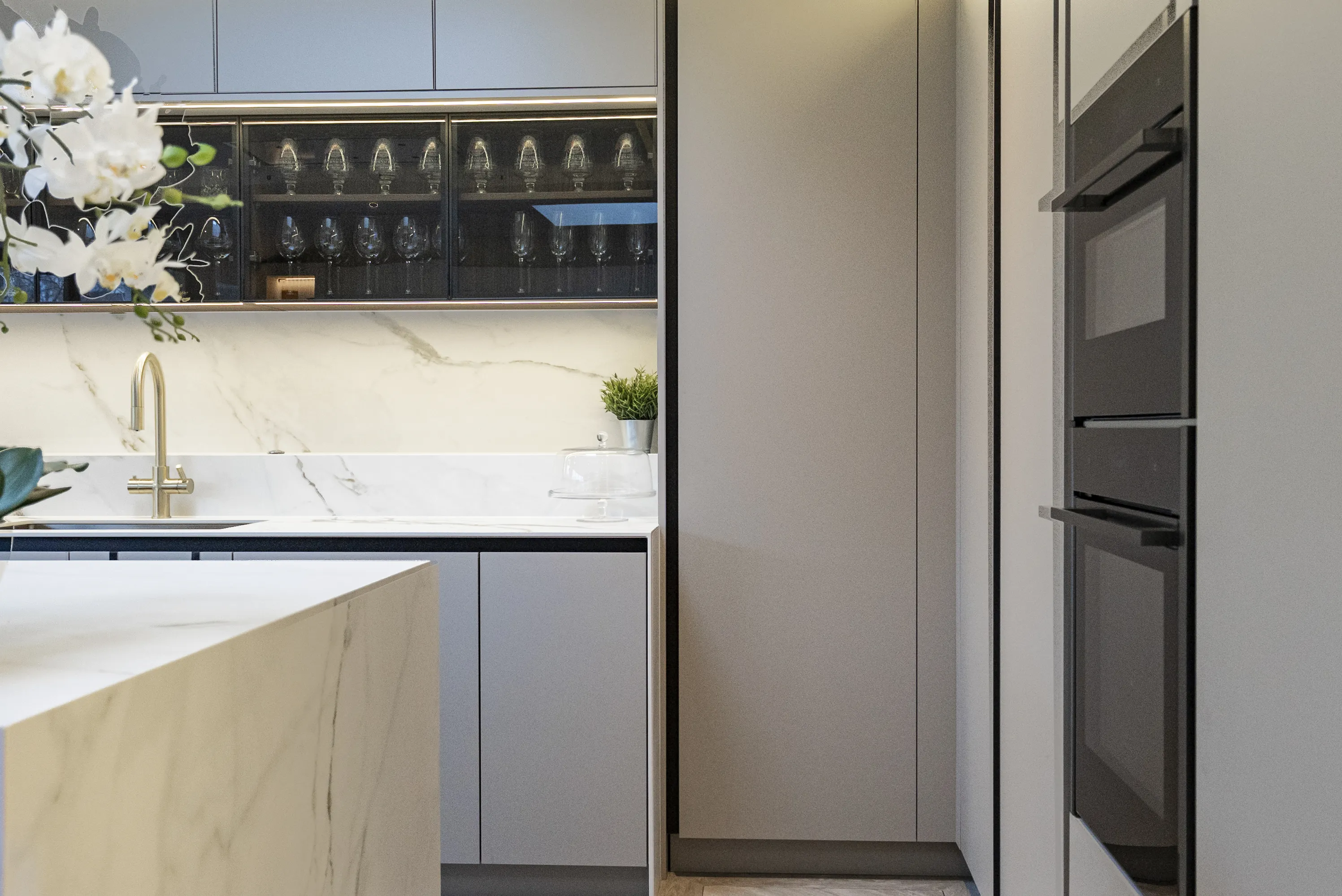
The starting point was the shadow gap. A consistent 6mm reveal runs around every cabinet face, every drawer, every door. It is the only line you see — and because it is the only line, it has to be perfect. Every panel was cut and edged to a tolerance our installers verify on site with a feeler gauge.
Choosing the oak
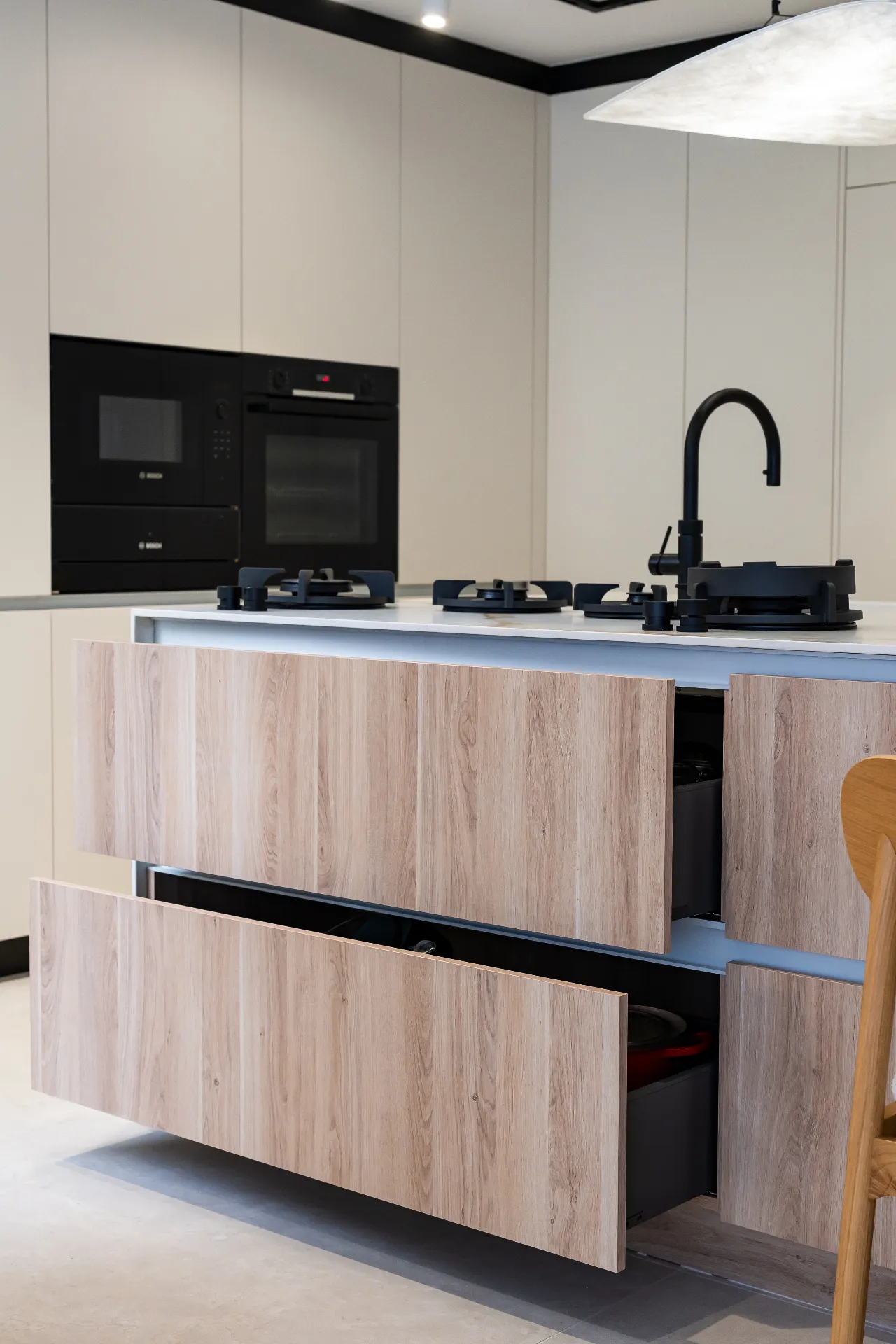
We specified European Oak from a single log run for the whole apartment. It is more expensive, and the lead time is longer, but it is the only way to keep colour and grain consistent across rooms that the eye reads as one space. The veneer was laid in a slip-match pattern with the grain running vertically through tall units and horizontally across the island — a deliberate change of rhythm to mark a change of use.
“Luxury, in this project, was an absence — of clutter, of contrast, of anything that asked for your attention.”
— Project notes, March 2026
What we left out
- No handles. Push-to-open mechanisms throughout.
- No applied mouldings. Every transition is a machined edge.
- No contrasting interiors. Drawer boxes in the same oak as the fronts.
- No surface-mounted lighting. All integrated, all on a single warm temperature.
It is tempting, on a project like this, to add a small piece of theatre — a fluted detail here, a brass inlay there. We resisted. The reward, we think, is a set of rooms where nothing announces itself, and the architecture is finally allowed to speak.